The 100 Sci Fi Series Where Survival Demands Impossible Choices
Introduction: Why The 100 Still Captivates Sci-Fi Fans
Here’s the thing about great sci-fi: the best stories don’t just entertain you. They stay with you long after the credits roll. And few sci fi series have pulled that off quite like The 100.
When the show first premiered back in 2014, it could have easily faded into the noise of other horror sci-fi tv shows airing at the time. After all, the premise sounded simple enough. According to its IMDb page, 100 juvenile delinquents get dropped onto a radioactive Earth after a nuclear apocalypse wipes out nearly everyone.

The only survivors left are the ones living on 12 space stations orbiting the planet (the Rotten Tomatoes synopsis lays this out perfectly).
But the show became so much more than that simple setup.
What makes The 100 different from so many other movies on science fiction and TV series? It refuses to give you easy answers. Every season, the characters face impossible moral choices. Do you sacrifice a few to save the many? Do you trust an outsider who might be a threat? The Final Draft blog captures this perfectly, calling the show’s premise "humanity’s shot at ultimate redemption." That idea of redemption, of trying again after failure, runs through every single episode.
And the characters. Clarke, Bellamy, Octavia. These aren’t simple heroes or villains. They grow, they break, they change. As one Scribd analysis notes, Bellamy’s arc alone takes him from a rebellious leader to someone caught in a tragic conflict with Clarke. You genuinely never know what they might do next.
The show ran for seven full seasons. That kind of run doesn’t happen by accident. It happens because fans connect with the story on a deep level. If you love intense, character-driven storytelling that makes you think, this is a series worth your time.

For more great recommendations in this genre, check out our curated list of 10 sci-fi series that deliver alien suspense and mind-bending twists. These shows share that same thrilling energy.
The Premise: A Bold Sci-Fi Vision
So, how does a story like this actually start?
A nuclear war killed almost everyone on Earth. The only survivors were the ones living on 12 international space stations in orbit at the time. As Rotten Tomatoes explains, they were the only humans left. They called this network of stations the Ark.
But the Ark was dying. It was running out of air and supplies. They needed to know if Earth was safe to live on again. So they made a desperate choice.
They sent 100 young prisoners down to the surface as a test. The IMDb summary puts it simply: 100 teens get stranded on Earth by their people in space. That is the basic setup for the show the 100.
But here is the thing. It gets messy fast.
Unlike american horror story, which tells a brand new story every season, The 100 sticks with the same characters. And it refuses to make things easy. Right away, the show asks tough questions. Is it okay to leave someone behind if it helps the group survive? Can you trust someone who looks different from you? Do the needs of the many really outweigh the needs of the few?

The Fandom wiki notes that the nuclear apocalypse happened 97 years before the teens land on Earth. That long gap means the Earth has changed. There are survivors down there too. The teens call them Grounders. And the Grounders do not want these newcomers on their land.
Season 1 is mostly about this basic fight for survival. But the show grows way beyond that simple start. The Final Draft blog describes this journey perfectly. It calls the show’s premise "humanity’s shot at ultimate redemption." That idea of trying to do better, of starting over, runs through every season.
As the series continues, it stops being just a ground level survival story. It becomes a multi season saga. You get political wars between different groups. You get a terrifying artificial intelligence. You get space travel to a distant solar system. The show constantly reinvents itself.
The Scribd analysis of the series captures how the characters change with the story. Bellamy, for example, goes from a rebellious leader to someone caught in a deep conflict with Clarke. The characters grow as the stakes grow.
If you are ready to watch a sci fi series that keeps surprising you, this is the one. And if you want to find it fast without wasting time, we have a great resource for you. Check out this guide on how to find sci fi thrillers on Netflix fast without endless scrolling. It will help you start watching right away.
Character Journeys: From Delinquents to Leaders
When the 100 delinquents hit the ground, they were just scared kids in handcuffs. But here is the thing about the 100. Those scared kids do not stay scared for long. They transform. And that is what makes this sci fi series so special to watch.
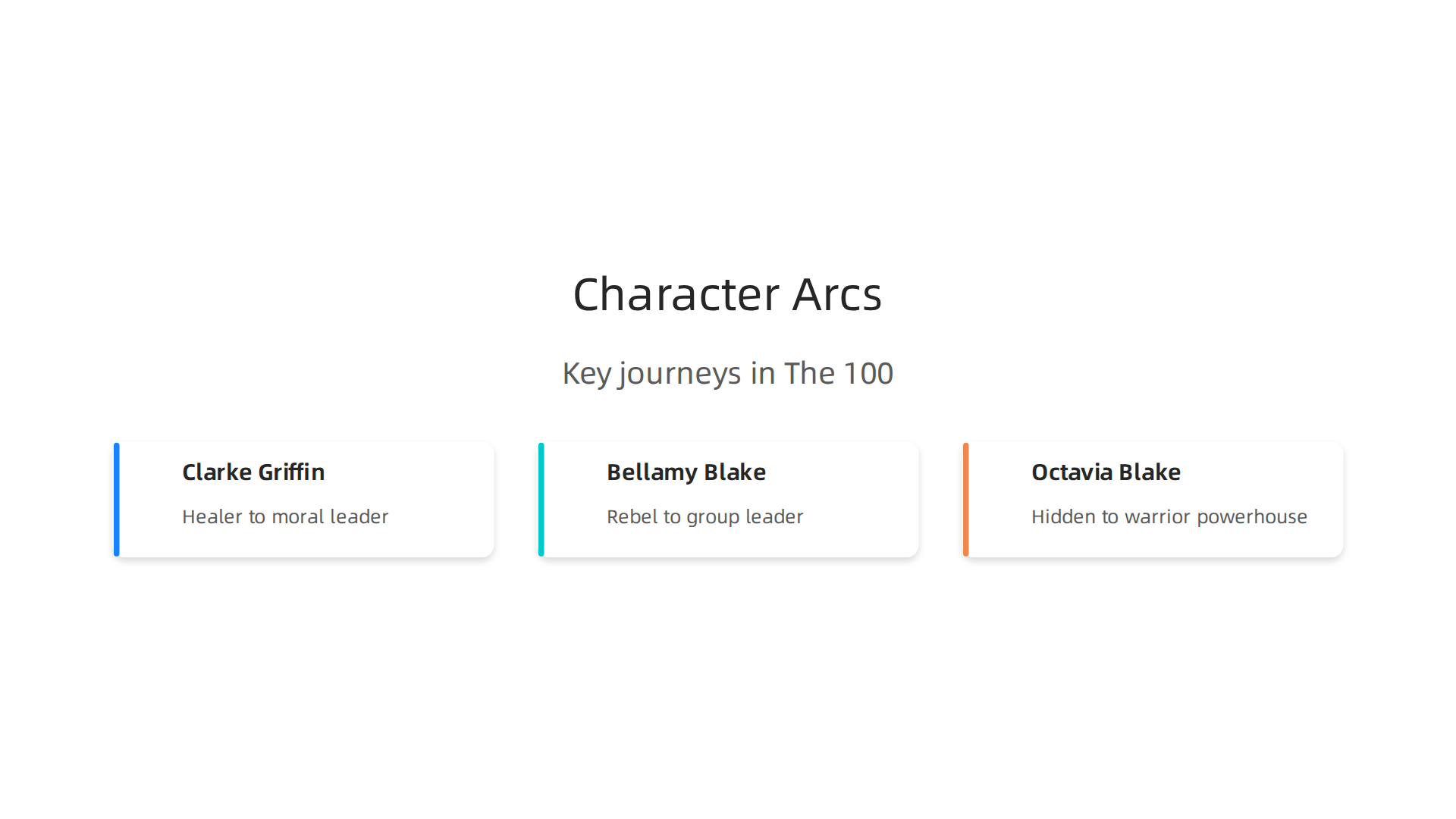
Let us talk about Clarke Griffin. She starts as a healer. She wants to save everyone. But the world does not let her.
The tension between Clarke and one of the tribes, the Mountain Men, is a major part of season 2. As one analysis of the show explains, her moral choices drive the entire season. She has to decide who lives and who dies. She carries that weight. The show even looks at the problem of evil through her choices. Can you remain good when the world is bad? Clarke tries to answer that. And she does not always get it right.
Then you have Bellamy Blake. He starts as a rebel who only cares about protecting his sister. He does not trust anyone from the Ark. But over time, he becomes a true leader. He learns to care about the whole group. The theme of self forgiveness is huge for him. He makes mistakes early on. Big ones. And the show does not let him forget them. It forces him to grow.
And then there is Octavia Blake. She was hidden under a floor for her whole life. She was a secret. A ghost. On Earth, she becomes something else entirely. She becomes a warrior. She fights harder than anyone. Her journey is the most physical. She literally goes from a prisoner to a powerhouse.
But here is the truth about the 100. It is not afraid to "ruin" its characters. As ScreenRant points out, the show explores the lengths humans will take to survive. Sometimes those lengths are ugly. The characters do not always make the right choice. They fail. They betray each other. They do terrible things for what they believe are good reasons.
This show is also known for its strong female leaders. Clarke, Octavia, Raven. They are not sidekicks. They are the ones making the tough calls. The show explores themes of identity, sexuality, and equality in a natural way. It feels real. When you compare it to something like american horror story, the difference is clear. American Horror Story trades characters every season. The 100 sticks with them. You watch them grow up. You watch them break. And you watch them rebuild themselves.
Their journeys from delinquents to leaders are full of pain and sacrifice. But that is what makes it so rewarding. If you love watching characters evolve over time, you will love this series. And if you are looking for more shows with that same kind of deep character growth, check out our list of 10 sci fi series that deliver alien suspense and mind bending twists. It is full of great recommendations for your next watch.
Themes of Morality and Survival
Here is the real question at the heart of the 100. What would you do to survive? That is not a simple question. It is the one the show asks over and over again. And it does not give you easy answers.
Most sci fi series let heroes be heroes. They make the right choice and everything works out. Not this one. The 100 forces its characters into impossible situations. Do you kill innocent people to save your own group? Do you betray a friend to protect a bigger cause? The show says those choices are yours to make. And they will haunt you.
Moral grey areas are everywhere in this show. Genocide, sacrifice, betrayal. These are not just plot points. They are the core of the story. The tension between Clarke and the Mountain Men in season 2 is a perfect example. As one analysis explains, her choices drive the entire season. She has to decide who lives and who dies. And there is no clean path.
The creators of the 100 are not afraid to ruin their characters. A common theme in online discussions is how the show explores the lengths humans will take to survive. Those lengths can be terrifying. Bellamy Blake struggles with self forgiveness after his worst moments. Clarke Griffin carries the weight of every life she could not save. Octavia Blake does things she can never undo.
The show even tackles the problem of evil head on. It asks if you can stay good when the world forces you to do bad things.

Some say the answer is simply not to choose evil at all. But that is harder than it sounds when your people are dying.
These ethical dilemmas feel real. They are not just for shock value. They make you think about your own limits. What line would you cross? The show does not judge you for your answer. It just shows you the consequences.
If you love stories that challenge traditional heroism, the 100 is for you. And if you want more shows that dig into survival and tough choices, check out our guide on how to find sci-fi thrillers on Netflix fast. It will help you skip the bad stuff and find the deep, thought provoking sci fi you actually want to watch.
The 100’s Cultural Impact
So how did a show about delinquents on a radioactive Earth become so huge? The 100 did more than just tell a gripping story. It changed how we talk about post-apocalyptic sci fi. And its influence is still visible in 2026.
Here is what made it special.
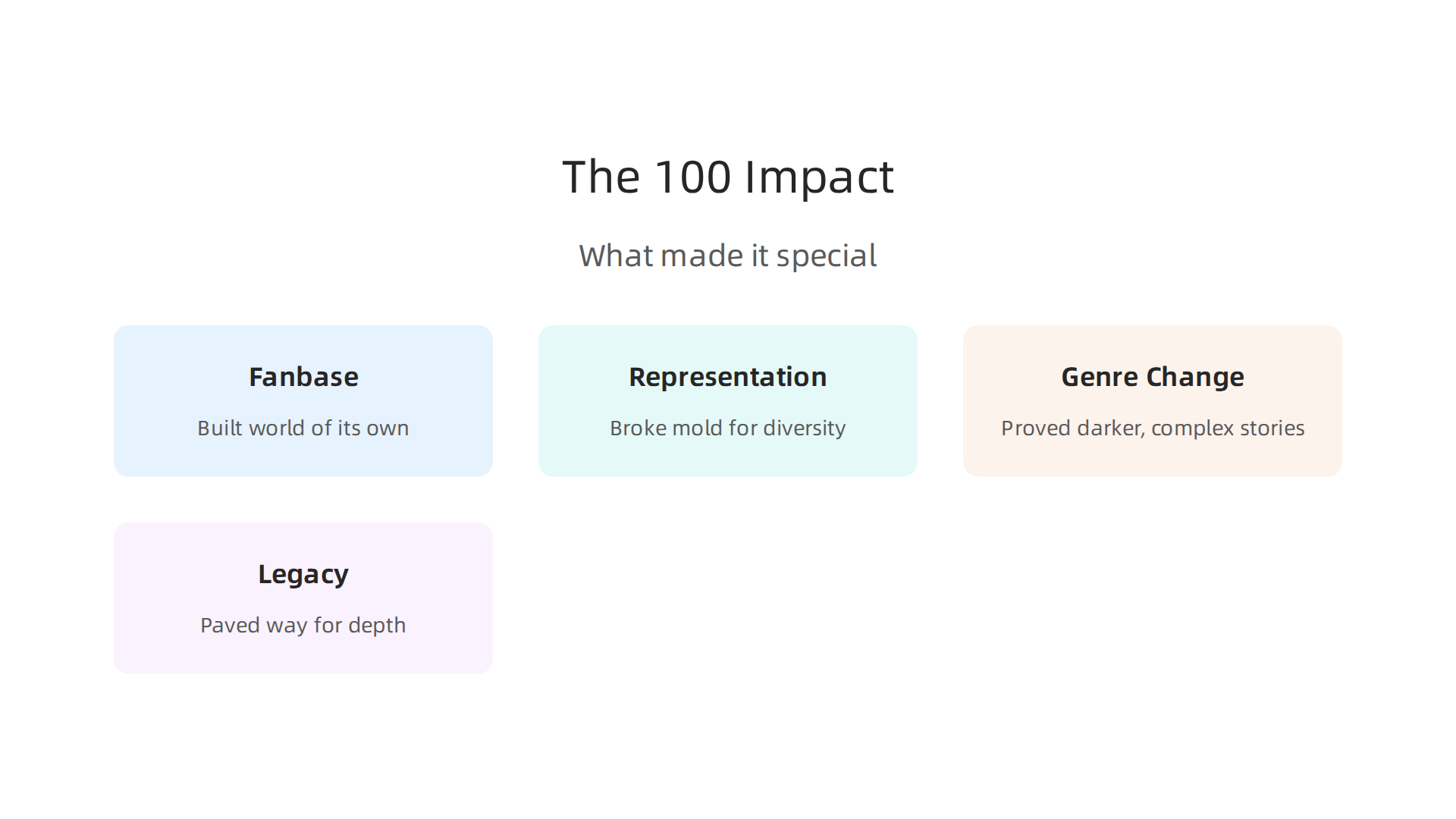
A fanbase that built a world of its own
The show sparked something rare. Fans did not just watch. They created. Online communities exploded with fan fiction, fan art, and deep theory discussions. Even years after the finale, the show maintains a strong Buzz Score, ranking among the most popular sci fi series according to Television Stats. The fandom stayed active because the story gave them so much to unpack. Every moral choice, every character death, every twist. Fans debated them endlessly.
Representation that broke the mold
Here is the thing. Back when the 100 aired, genre shows rarely featured diverse casts. This one did things differently. It introduced complex LGBTQ+ characters like Clarke and Lexa whose relationship was not just a side plot. It mattered. Their love story drove real consequences. That was groundbreaking for a genre series at the time.
The show also gave us strong female leaders who were not perfect. Clarke, Octavia, Raven. They made mistakes. They failed. They kept going. That kind of representation changed what audiences expected from horror sci-fi TV shows. It showed that women could carry the weight of a dark, violent world without being turned into simple heroes.
How it changed the genre
You can see the fingerprints of the 100 everywhere now. Many post-apocalyptic shows that came after borrowed its formula. Tough choices. Constant danger. Moral grey areas. It proved that audiences wanted darker, more complex storytelling in sci fi. It was not just about cool tech or alien battles. It was about people breaking under pressure.
Even streaming platforms today use similar themes in their original content. The show helped pave the way for more psychological and ethical depth in the genre. And that is a big reason why you can find so many 10 sci-fi series that deliver alien suspense and mind-bending twists today. The bar got higher because the 100 raised it.
The legacy lives on
Ratings data from Wikipedia shows the show held steady across seven seasons. It averaged around 1.85 million viewers per episode in its first season according to TV Series Finale. Not bad for a CW drama about kids from space.
But the real legacy is not in the numbers. It is in how the show made you feel. It made you uncomfortable. It made you think. And it made you care about characters who did terrible things.
That is the kind of cultural impact that lasts.
Why The 100 Stands Out Among Sci-Fi
When you think of sci fi series, what comes to mind? Alien invasions? Spaceship battles? Fancy laser guns? The 100 does not start that way. In fact, the early seasons feel almost like a survival drama with a sci-fi backdrop. That is exactly why it stands out.

It did not rely on advanced technology
The show is set 97 years after a nuclear war destroyed civilization. A spaceship called the Ark sends 100 juvenile delinquents back to Earth to see if it is livable again, according to IMDb. These kids have almost nothing. No high-tech weapons. No personal shields. No transport pods. Just their wits, a few supplies, and a dangerous planet to explore. That grounded start made it feel different from most sci-fi shows at the time. Instead of relying on shiny tech, it relied on human survival instincts. You got to watch them figure out fire, shelter, and food all over again.
It balanced intimate drama with huge stakes
Here is the thing. The 100 never forgot that small personal moments matter just as much as the fate of humanity. One episode you are torn up over a character’s broken heart. The next episode that same character is deciding whether to wipe out an entire clan. That balance is rare. Many horror sci-fi tv shows go all in on action and forget the people behind it. The 100 kept the human element front and center. Every big decision came from personal loss, love, or fear. That made the stakes feel real. You did not just care about who lived or died. You cared about why.
A darker tone that did not protect anyone
Most TV shows have main characters that are safe. You know they will survive no matter what. Not here. The 100 was famous for killing off major characters without warning. No one was safe. That made every episode tense. You could not relax. As SlashFilm points out, shows like The 100 share a heightened world where young people decide the fate of humanity. But this one did it with a brutal honesty that few series dare to match. Characters you loved died suddenly, and the show let you feel that loss.
How it compares to other sci-fi
If you look at lists like the 100 Best Sci-Fi TV Shows of All Time from Rotten Tomatoes, you see classics like Star Trek and Stranger Things. The 100 does not fit neatly alongside them. It is grittier. It is more willing to make you uncomfortable. It is not about cool alien races or time travel. It is about people breaking under impossible pressure. That is why fans of the 100 often look for series and movies that capture the same psychological depth. If you are hungry for more content like this, check out these three sci-fi thriller movies that deliver alien suspense and psychological depth. They scratch a similar itch.
What makes it truly unique
At its core, the 100 is a show about people making impossible choices. No clear good guys. No guaranteed happy endings. It is messy and brutal and deeply human. That is why it still stands out among sci fi series in 2026.
If you love that kind of chaos and moral complexity in your sci-fi, you might enjoy something a little different. Need Sci-Fi With Chaos? A strange, funny identity-swap adventure with cosmic stakes.
The Lasting Legacy and Fan Community
The series finale of the 100 aired back in 2020. But here in 2026, the show is far from gone. New viewers discover it every week on streaming platforms. The fan community is still loud, active, and full of fresh theories.

That kind of staying power does not happen by accident.
Why streaming keeps it alive
Streaming has given the 100 a second life. According to Television Stats, it currently ranks as the #395 most popular TV show overall. The first season averaged about 1.85 million viewers per episode, as noted on The 100 Wiki. Those numbers grew as word spread about the show’s brutal twists. It is the kind of series you start on a whim and then binge for three days straight.
If you love that intense feeling of discovery and want to find more movies that hit the same way, you might find it helpful to find sci-fi thrillers fast using Austin Butler’s filmography. His roles carry that same weight and tension.
The fandom stays busy
The the 100 fandom is incredibly creative. You will find:
- Deep fan theories that connect small details
- Emotional video edits set to music
- Rewatch podcasts analyzing every major decision
- Memes that still hit hard years later
A lot of fans compare the impossible choices in the show to other horror sci-fi tv shows or even american horror story. But the 100 has its own specific flavor of pain and hope. The IMDb page still gets new reviews every week from people watching for the first time. That says a lot.
The prequel that fans still want
One of the biggest signs of the show’s lasting legacy is the hunger for more. The backdoor pilot episode "Anaconda" introduced the origin story of the Grounders. Fans have been campaigning for a full series ever since. Even in 2026, the conversation about the prequel comes back to life in online forums. It shows that the world of the 100 has serious franchise potential. There are so many stories left to tell in that universe.
That is rare for a sci fi series. Most shows end and people move on. But the 100 stuck around. Its messy, human chaos is hard to forget.
What comes next for fans
If you have already watched all seven seasons and need a different kind of escape, maybe something with weird science fiction energy but in a shorter format. Want a Stranger Watchlist Break? The Ridiculous brings weird science fiction energy in book form. It is a fun, fast read that scratches a similar itch.
Summary
This article explains why The 100 remains a standout sci‑fi series by breaking down its bold premise, deep character work, and moral complexity. It covers the core setup—juvenile delinquents sent to a post‑apocalyptic Earth—and traces how the show evolves into a multi‑season saga with political wars, AI threats, and space travel. You’ll learn how Clarke, Bellamy, and Octavia grow through brutal choices, why the series embraces moral grey areas, and how its representation and intense storytelling shaped the genre. The piece also outlines The 100’s cultural impact, why streaming keeps the fandom alive, and points you to resources for finding similar series and movies to watch next.